As the labour market evolves, candidates are rethinking how they present their experience, skills and professional identity. New technologies, shifting employer expectations and increasingly competitive hiring processes are changing not just what appears on a CV, but the language candidates use, the way they tell their story and even how the document is designed.
The CV also has more audiences than it once did. It may pass from a candidate to a recruiter, a hiring manager and, increasingly, a screening system designed to identify the strongest applications. A job seeker's choice of words, the skills they emphasise and the experience they put front and centre can all shape what happens next.
So what does the modern CV actually look like?
To find out, CVwizard analysed over 15 million CVs created on its platform between 2020 and 2026. The analysis looks at the skills, experience, language and career patterns that define the modern CV, and how they have evolved over time.
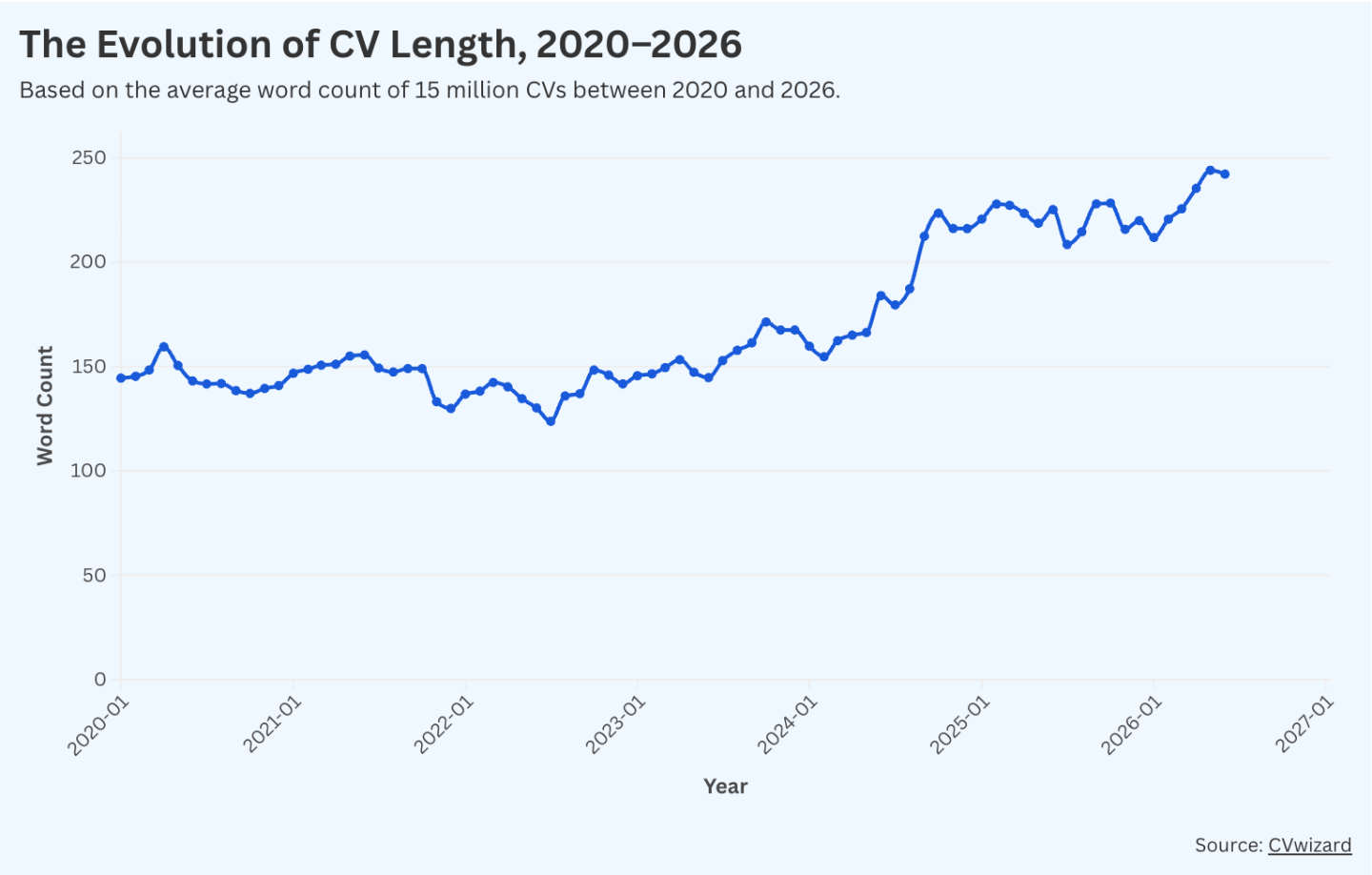
CVs are getting longer. In 2026, CVs are 58% longer than they were in 2020, reaching their highest average length in May of 2026. |
Pronouns are becoming far more common. Their use has risen 784% since 2020, with She/Her the most frequently listed. Denmark, Canada and Germany have seen the highest rates of pronoun use. |
Mentions of AI tools have increased by more than 100-fold since 2020, with the sharpest acceleration coming in 2025. |
Neurodivergence is appearing more often on CVs. Mentions have increased by 63% since 2020, with autism and ADHD among the most commonly referenced. |
In English-speaking markets, French is the most common second language, followed by Hindi and then Spanish and Arabic. |
Headshots have made a comeback, but growth has stalled. Image use on CVs has increased 118% since 2020, although it has remained broadly flat since 2022. |
From the skills and keywords appearing most often to the changing conventions of CV design, this report examines the trends shaping how people present themselves to employers, and what they reveal about the modern job search.
How do we write CVs?
Few questions in the job search are more debated than how long a CV should be. Some hiring experts argue that a concise, one-page CV is easier to scan, while others favour including as much relevant experience as possible. In practice, most CVs run to one or two pages, a pattern that holds across much of the world.
According to the data, CVs are typically getting longer, and have seen a 58.5% increase in word count from 2020 to 2026. July 2022 saw the shortest CVs over this period, while May 2026 saw the longest.
 *To explore the data in the interactive chart, go here.
One possible explanation for the lower word counts during the earlier part of the decade is the impact of the COVID-19 pandemic. The disruption to education and employment caused by lockdowns meant that graduates entering the workforce from 2020 onwards had fewer opportunities to gain traditional work experience. With less experience to draw upon, their CVs may naturally have been shorter and contained fewer details.
The sharper increase from 2024 onwards, meanwhile, may reflect the growing accessibility of AI-powered tools. Candidates who might once have struggled to expand on their experience on their CVs can now do so at the click of a button.
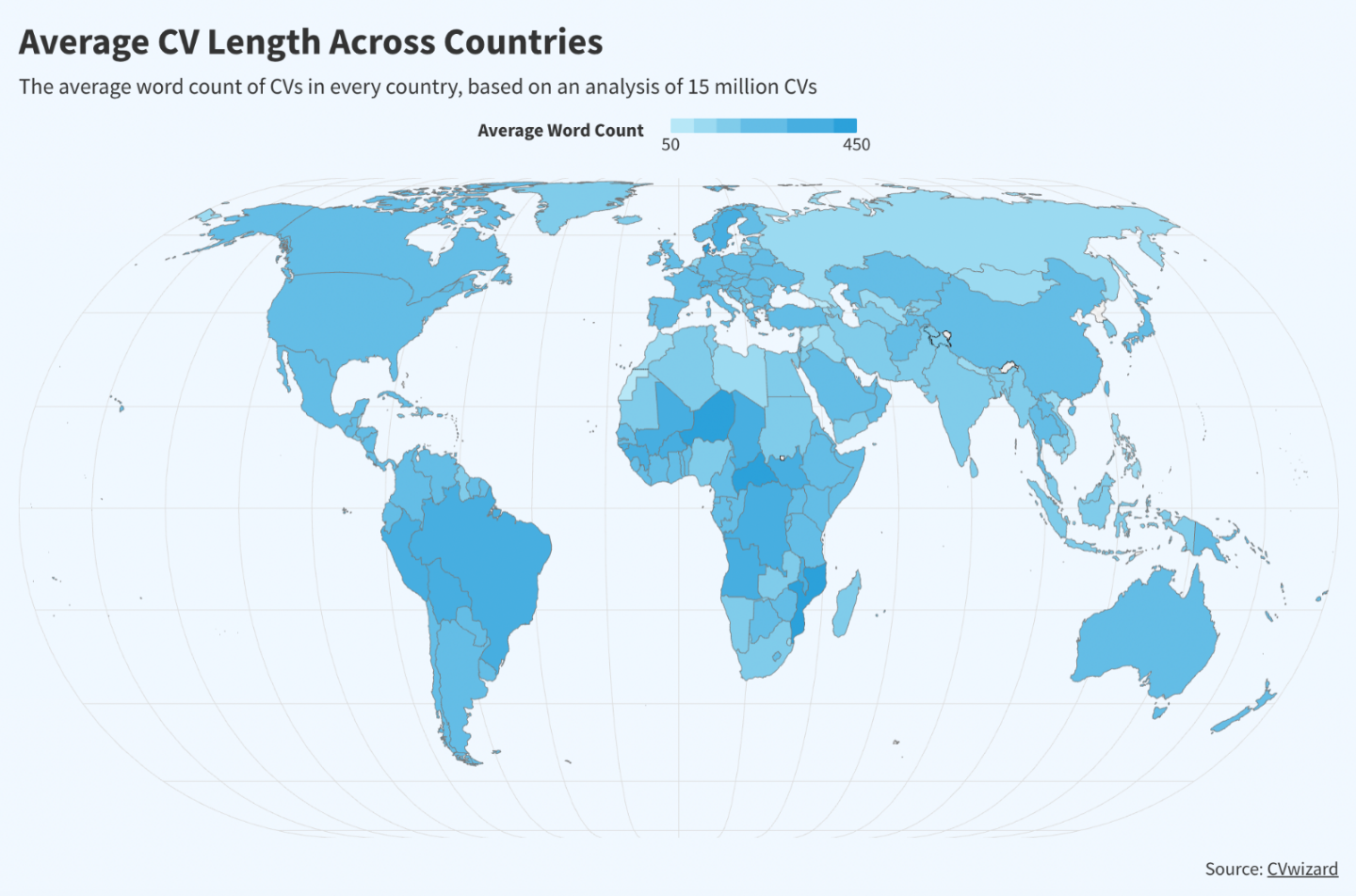
CV length varies dramatically by country. Candidates in Denmark, Sweden and Switzerland produce some of the longest CVs in the world, with average word counts exceeding twice the overall average. By comparison, CVs from the UK, US and Australia cluster much closer together, although they too are around twice the overall average.
 *To explore the data in the interactive chart, go here.
The language of work
Words matter. As AI-powered recruitment tools and applicant tracking systems become a more common part of the hiring process, candidates are increasingly writing for both human readers and software designed to identify relevant skills and keywords.
That may help explain why the same phrases appear again and again. Some describe genuine strengths, while others have become staples of CV writing, familiar shorthand for qualities candidates want employers to see.
The 10 most common CV buzzwords are:
- Extensive experience
- Dedicated
- Motivated
- Dynamic
- Committed
- Passionate
- Innovative
- Hardworking
- Team player
- Detail-oriented
The list reveals how heavily CVs still rely on broad descriptions of character and work ethic. But the very popularity of these phrases can work against candidates: when language is used by everyone, it becomes harder for any individual CV to stand out.
The CVs that stand out to hiring managers tend to show these qualities rather than simply name them, replacing “hardworking” with an achievement, “dynamic” with an example of taking on responsibility, or “team player” with evidence of what was accomplished together.
Looking beyond the traditional buzzwords, the words candidates use to describe themselves reveal a similar emphasis on how they work, not just what they do. Analytical, organised and creative top the list, followed by terms such as reliable, adaptable, flexible and collaborative.
The 10 most common self-descriptive terms are:
- Analytical
- Organised
- Creative
- Hands-on
- Patient
- Operator
- Reliable
- Adaptable
- Flexible
- Collaborative
Taken together, the language paints a picture of the modern candidate as adaptable, dependable and collaborative, someone who can work well with others while responding to changing demands. It also suggests that, alongside technical skills and experience, candidates increasingly see personality and working style as part of their professional identity.
The skills behind the CV
Skills are one of the clearest signals of what candidates believe makes them employable. Across over 15 million CVs, the data shows a workforce balancing longstanding workplace strengths, such as communication, teamwork and time management, with technical expertise and an increasingly visible interest in artificial intelligence.
Soft skills dominate
When looking at the soft skills candidates mention on their CVs, they overwhelmingly focus on how they work rather than what they know. Communication is the most dominant soft skill, appearing on 36% of CVs. This is followed by problem-solving (20%), time management (15%), leadership (14%) and then teamwork (13%).
Communication, problem-solving and time management all centre on how effectively someone operates in a workplace, while leadership and teamwork highlight how they work with others.
Technical skills remain familiar
Despite the rapid pace of technological change, the technical skills appearing most often on CVs are remarkably familiar. Excel leads the list, appearing on around 14% of all CVs, followed by Word (10%) and PowerPoint (6%). These everyday workplace tools remain far more common than programming languages.
Python is the most frequently mentioned programming language, likely due to how widely it is used across different fields. This is followed by R, HTML, Java, SQL, CSS and C++ that also feature in the top ten.
AI enters the CV
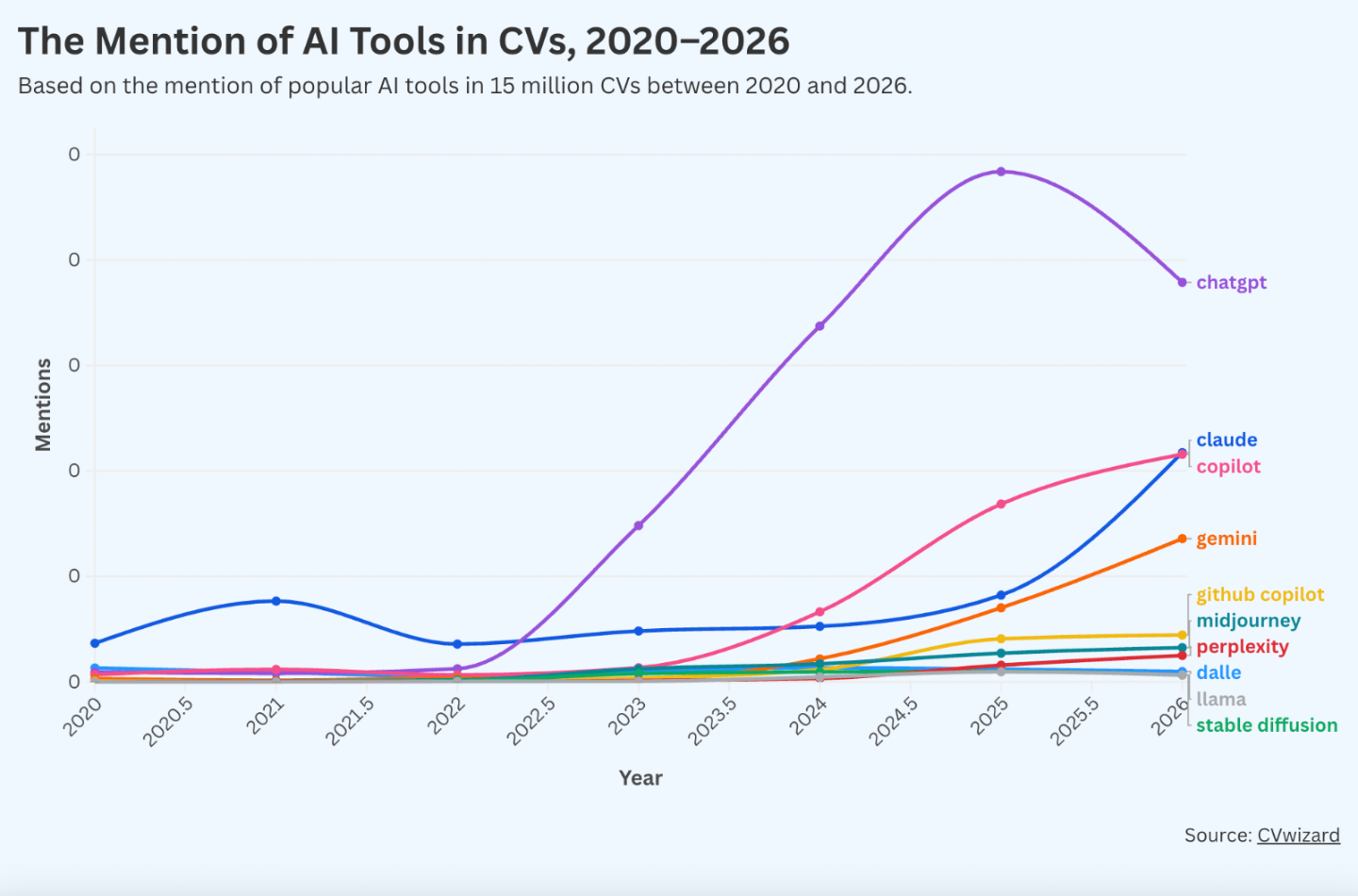
The biggest change in CVs is happening around artificial intelligence. What was once a niche addition to a CV has rapidly become a more visible signal of digital capability. Mentions of AI tools have increased by more than 100-fold since 2020, with the sharpest acceleration coming in 2025, when mentions rose to more than 2.5 times their 2024 level.
ChatGPT dominates, appearing on almost 22,000 CVs, followed by Copilot and Claude. Gemini, GitHub Copilot and generative AI tools including Midjourney, DALL·E and Stable Diffusion also make the top ten.
 *To explore the data in the interactive chart, go here.
In the past year, some AI tools have seen a larger surge in popularity than others. From 2025 to 2026, Claude saw the biggest leap in CV mentions, rising 164%, followed by Gemini with an increase of 93% and Perplexity up 58%. However, some AI tools have seen declines, with candidates mentioning Stable Diffusion 36% less than last year, Llama down 31%, and even ChatGPT, the current dominant tool, down 22%.
The rise of AI on CVs suggests a broader shift in what candidates consider worth signalling to employers. Proficiency is no longer limited to established workplace software; increasingly, knowing how to work with emerging AI tools is itself becoming a skill worth putting on paper.
A multilingual workforce
Language skills offer another window into the diversity represented across the CV data. English is by far the most commonly listed language, appearing on almost 40% of CVs. But beyond English, the data reveals a strikingly broad linguistic mix.
When looking at exclusively English-speaking markets, French is the most common second language with a mention rate of 6.53% of all CVs. It is particularly prevalent in Canada where 14% of CVs mention this language, and is the third most common language in the UK and United States.
This is followed by Hindi, mentioned in 5.83% of English-speaking CVs, the second most common language in the UK and Australia. Rounding off the top five are Spanish (5.55%), Arabic (2.84%) and Punjabi (2.03%).
Taken together, the data suggests a workforce becoming multilingual in a new sense. Alongside English, Hindi, French and Spanish, candidates are increasingly fluent in Excel, Python and AI, languages of a different kind, but just as valuable to employers. Coding and AI fluency are starting to read less like technical add-ons and more like a second (or third) language in their own right.
Culture, identity & life outside work
The CV has traditionally been a place for qualifications, experience and professional achievements. But increasingly, candidates are using it to reveal something about the person behind the career history, from their pronouns and hobbies to their neurodivergence, side interests and even their star sign.
Identity becomes more important
Pronouns are one of the clearest signs of this shift. Mentions of he/him, she/her and they/them have increased by 784% since 2020, with she/her the most frequently listed.
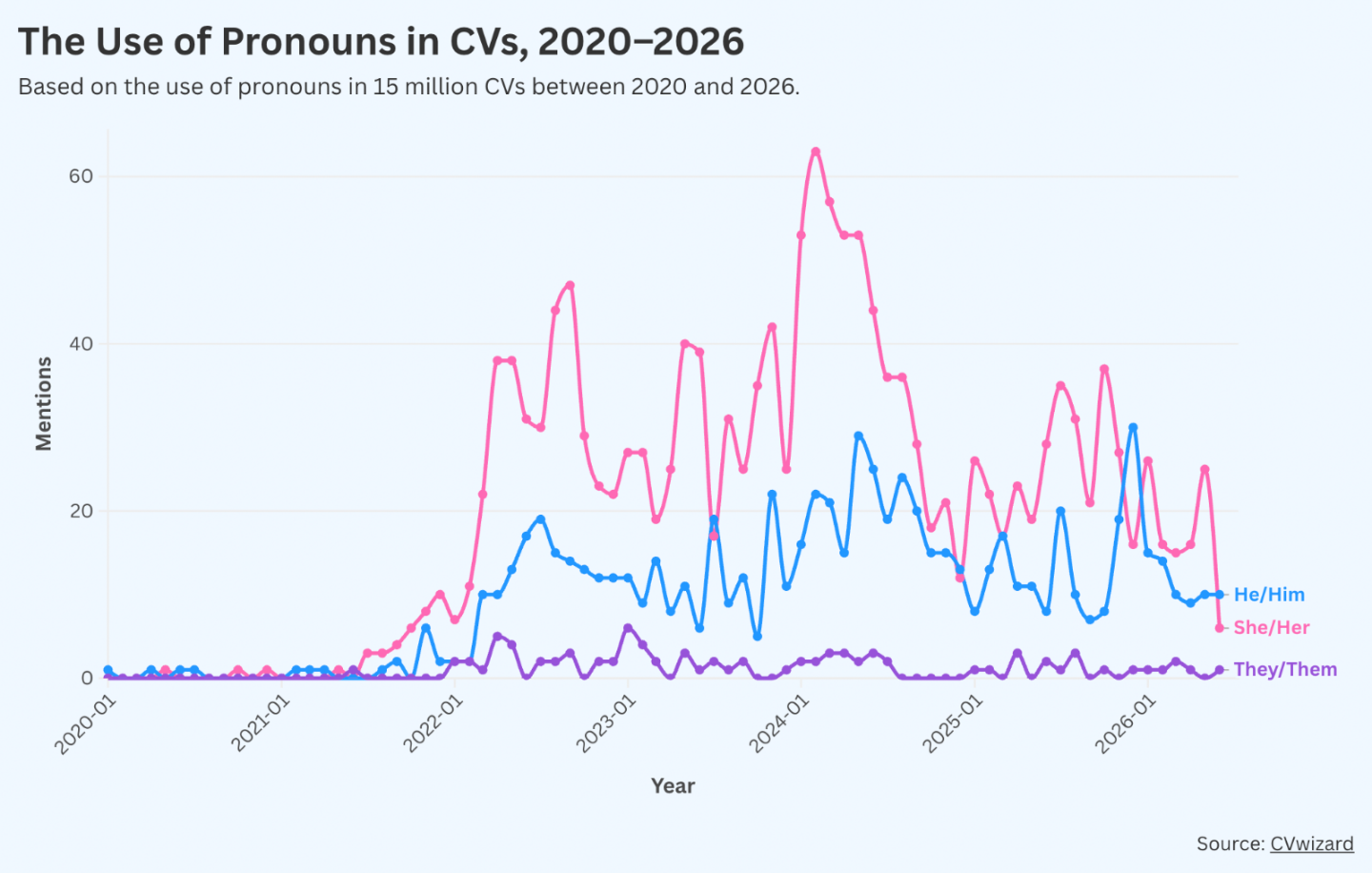 *To explore the data in the interactive chart, go here.
The practice is also more common in some countries than others. Denmark has the highest rate of pronoun use in CVs, followed by Canada, Germany, the UK and Australia.
The rise suggests that, for a growing number of candidates, a CV is not simply a record of professional experience. It can also be a way of signalling how they want to be addressed and understood in the workplace.
Life beyond the job
Hobbies offer another way for candidates to show personality beyond their professional experience. The most common interests are largely familiar, such as reading, travelling, cooking, photography and music, but the range of activities appearing on CVs suggests that candidates are increasingly willing to give employers a glimpse of their lives outside work.
The 10 most commonly mentioned hobbies are:
- Reading
- Travelling
- Cooking
- Photography
- Music
- Gardening
- Volunteering
- Swimming
- Football
- Writing
This could also be down to a more competitive job market. Candidates list their hobbies not only to give hiring managers an insight into their personalities, but also to indicate if they’ll be a cultural fit within the company they’re applying to. This is particularly relevant given that, according to a Glassdoor study, 10–25% of new hires leave within six months, with many citing a poor culture fit as the reason.
Neurodivergence becomes more visible
One of the most striking changes is the rise in mentions of neurodivergence. References have increased by 63% since 2020, with autism, ADHD, dyslexia and OCD among the most frequently mentioned.
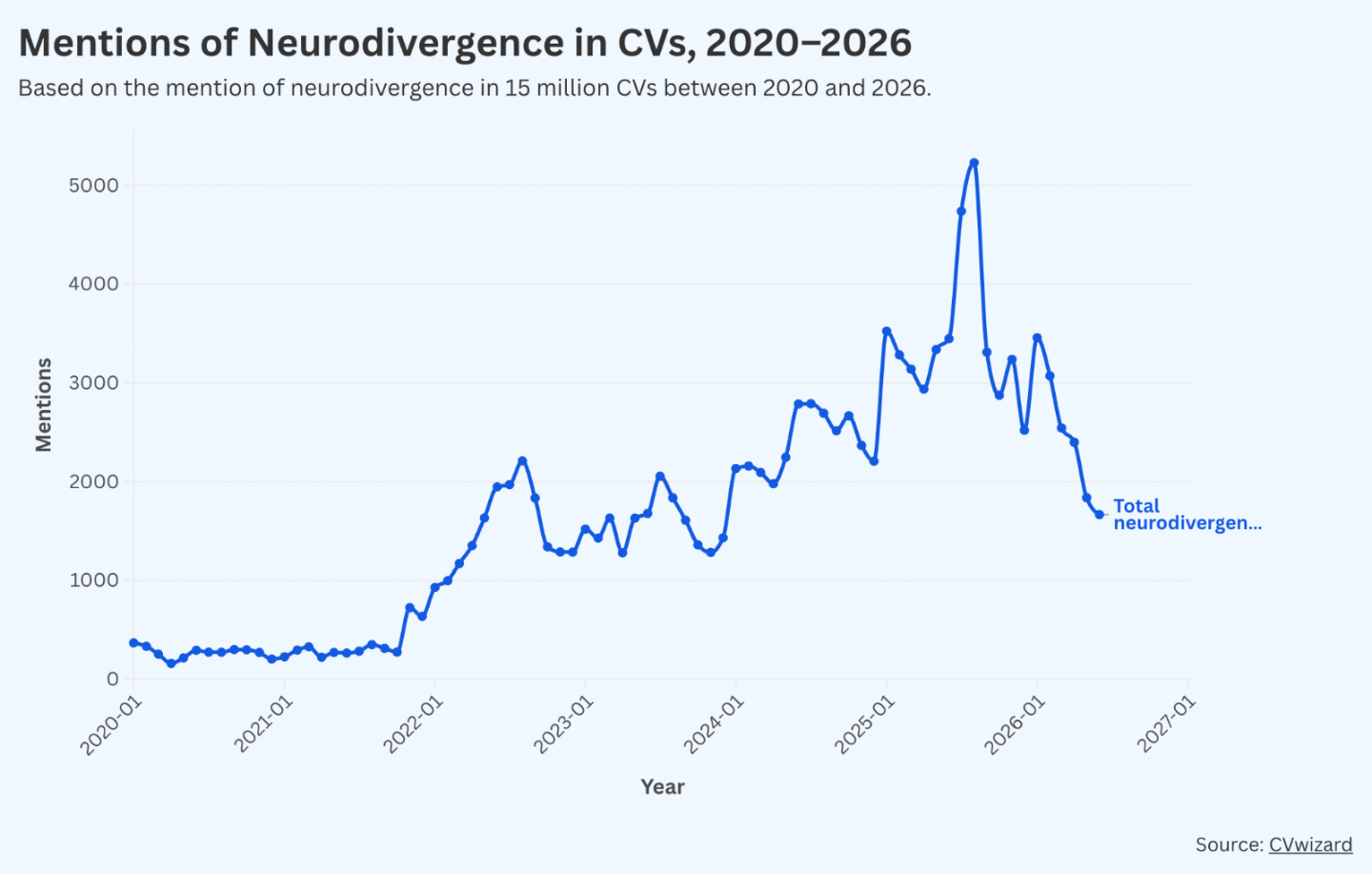 *To explore the data in the interactive chart, go here.
The increase may point to a broader shift in how candidates think about what belongs on a CV, as aspects of identity that were once rarely disclosed in job applications become more visible.
What’s your star sign?
Not every personal detail carries the same weight. Some candidates are going a step further and including something decidedly less conventional: their star sign.
Cancer is the most frequently mentioned, followed by Leo and Capricorn. For some candidates, mentioning their star sign may feel like a way to bring a little more personality to an otherwise formal application, but sometimes it can come across as out of place in a professional setting.
Taken together, these trends suggest the boundaries of the CV are becoming less rigid. Alongside skills and experience, candidates are increasingly using the document to communicate who they are, what matters to them and how they see themselves.
The visual layer
A CV is more than a collection of words. Its colour, typography and imagery can shape how it is perceived before a hiring manager has read a single sentence. And while candidates are often told to keep their CVs simple, the data suggests they are increasingly using design to make them feel more personal.
The return of the headshot
Headshots remain a divisive feature of the modern CV. In some markets and industries they are commonplace; in others, candidates are often advised to leave them out.
Yet their use has risen sharply. The inclusion of candidate photos has increased by 118% since 2020, before levelling off in 2022. It has remained at roughly the same rate for the past four years, suggesting that the initial growth may have stabilised into a new norm.
This could be down to the rise in remote working during the COVID-19 pandemic between 2020 and 2022. During this period, CVs may have adapted to a temporary working reality in which personal presentation was arguably more important. This could also help explain why the use of headshots levelled off following the pandemic.
There’s a stark cultural divide in CV conventions along geographic lines. In the UK, US, Australia, and the Netherlands, photo inclusion holds steady in the 15–30% range, a pattern that could reflect the legal guidance,discouraging photos on CVs as a safeguard against bias. Elsewhere, the picture is almost inverted: in Indonesia, Bangladesh, Turkey, Sri Lanka, and the Philippines, photo inclusion regularly climbs to 60–80%, where attaching a photo isn't the exception but close to an expected standard.
Blue dominates
When it comes to colour, candidates show a clear preference for blue. In the top 10, there are four shades of blue, along with blacks, grey and reds.
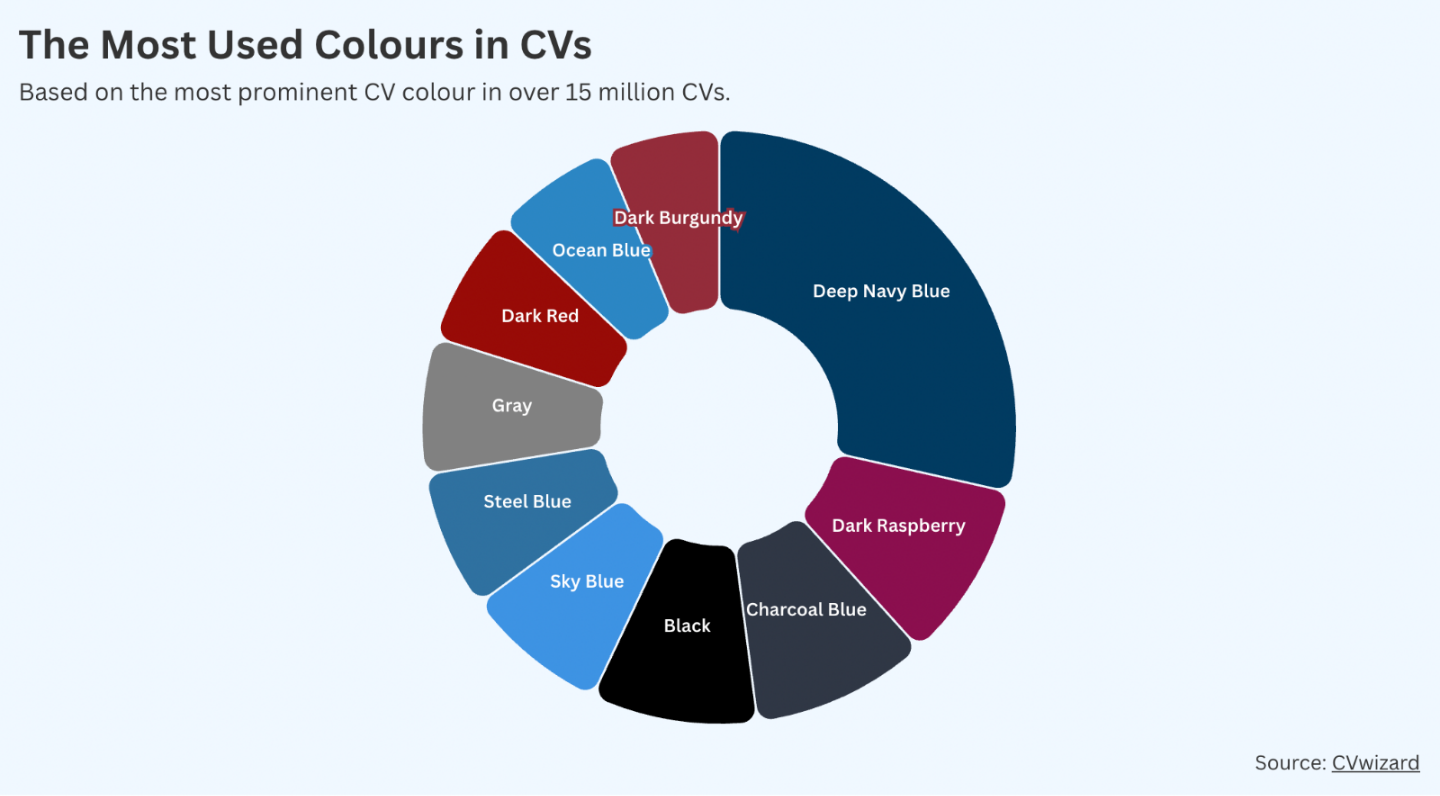 *To explore the data in the interactive chart, go here.
Blue has long been associated with qualities such as trust, reliability and stability, perhaps helping explain its enduring popularity on a document designed to make a strong first impression.
But candidates are not sticking exclusively to corporate convention. Magenta is the second most popular colour, while black, grey, burgundy and teal also feature prominently among the top 20.
Familiar fonts still win
Typography tells a similar story. Poppins is the most popular font in the dataset, followed by a mix of familiar sans-serif and traditional serif typefaces.
The 10 most popular CV fonts are:
- Poppins
- Arial
- Times New Roman
- Calibri
- Georgia
- Noto Sans
- DejaVu Sans
- Garamond
- Helvetica
- Noto Serif
The list reveals a balance between old and new. Poppins, Noto Sans and DejaVu Sans reflect the continued appeal of clean, contemporary typography, while Times New Roman, Georgia and Garamond show that traditional serif fonts have not disappeared from the job search.
Ultimately, CV design appears to be evolving without becoming radically experimental. Candidates are adding more visual elements, but they are largely doing so within familiar conventions, favouring trusted colours, recognisable fonts and layouts that still put the information first.
The CV caught between two readers
Nowhere is this tension clearer than in how candidates are actually writing their CVs today. As the CVwizard team put it:
Our report shows that modern CVs are under pressure from two directions at once. On one side, applicant tracking systems and AI screening tools are pushing candidates toward denser, keyword-heavy language optimised to be found and parsed by software before a human ever sees it.
On the other, candidates are pushing back against that flattening effect, using the same document to signal pronouns, neurodivergence, hobbies, even star signs, not because the market demands it, but because they want to be read as a person and not just a set of keywords.
The modern CV hasn't decided who it's for. It's being written for a screening system and a hiring manager at once, and those two readers often don't want the same thing. This has led to CVs becoming longer and more densely packed with buzzwords than ever before, even as candidates grow more comfortable letting their personality show through.
Ready to put these CV trends into practice?
Knowing what makes a strong CV is one thing. Putting it into practice is another.
Whether you’re starting from scratch, updating an existing CV or applying for your next role, CVwizard can help you create a professional, modern CV that showcases your experience, highlights your skills and is built for today’s job market.
Create your CV with CVwizard today.
Methodology
To identify the CV trends shaping today’s job market, CVwizard analysed a dataset of 15.5 million CVs created by customers using its website between 2020 and June 2026.
The analysis focused on three key areas of CV composition: language, skills and design. For language, the research examined the frequency and prevalence of words and phrases used across CVs, identifying the terms candidates most commonly use to describe their experience, responsibilities and professional attributes. For skills, CV content was analysed to determine which technical, soft and transferable skills were mentioned most frequently, as well as how the prominence of different skills has changed over time.
The analysis also considered CV design and formatting characteristics, including the visual and structural choices candidates make when creating their CVs. These factors were examined to identify broader shifts in how job seekers present information and structure their applications.
Where relevant, the data was segmented by year to track changes over time and identify emerging, declining or persistent trends as well as by location.
Make an impression with your CV
Create and download a professional CV quickly and easily.